
HINGE CUT GUIDE
Owen Brick
3/15/20266 min read
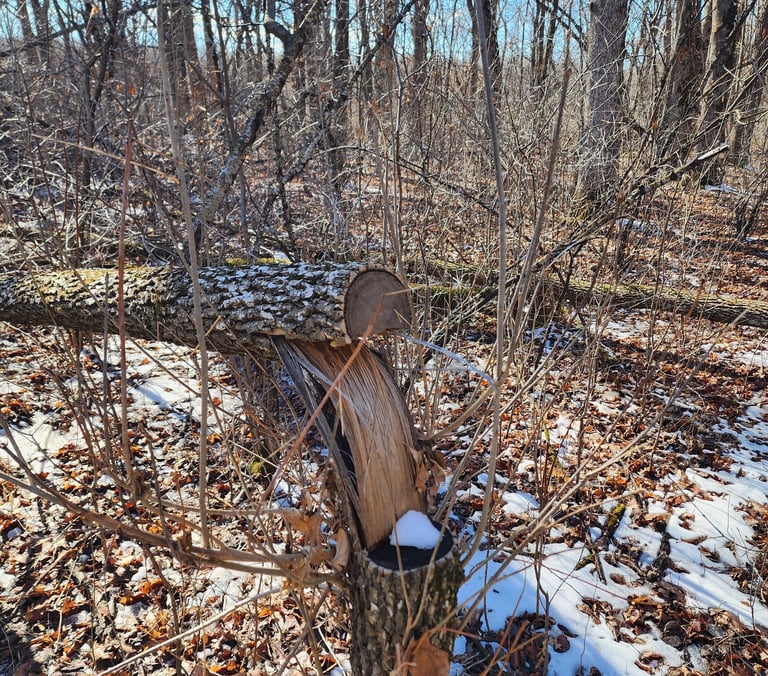
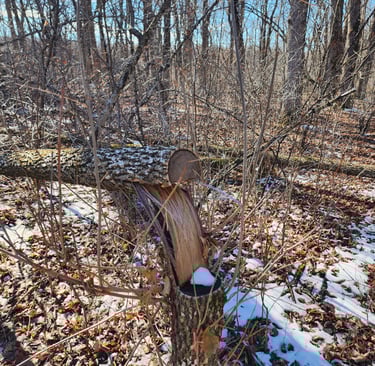
Hinge cutting is one of the most talked-about habitat techniques in the whitetail world. Spend a few minutes online, and you’ll find countless claims that hinge cuts can transform any property into a deer destination overnight. While hinge cuts are absolutely a valuable habitat tool, the reality is that their impact is much more subtle. When used correctly, hinge cuts can provide excellent browse and side cover, two of the most important components deer need in their bedding areas. But when they’re used incorrectly, they often result in wasted effort, dead trees, and little benefit to the deer herd.
Understanding where hinge cuts fit into a larger habitat strategy is important. In this article, we’ll break down why hinge cuts work, where they should be used, how to complete them properly, and why they should be viewed as a tool, not an end-all fix-all, for improving your property.
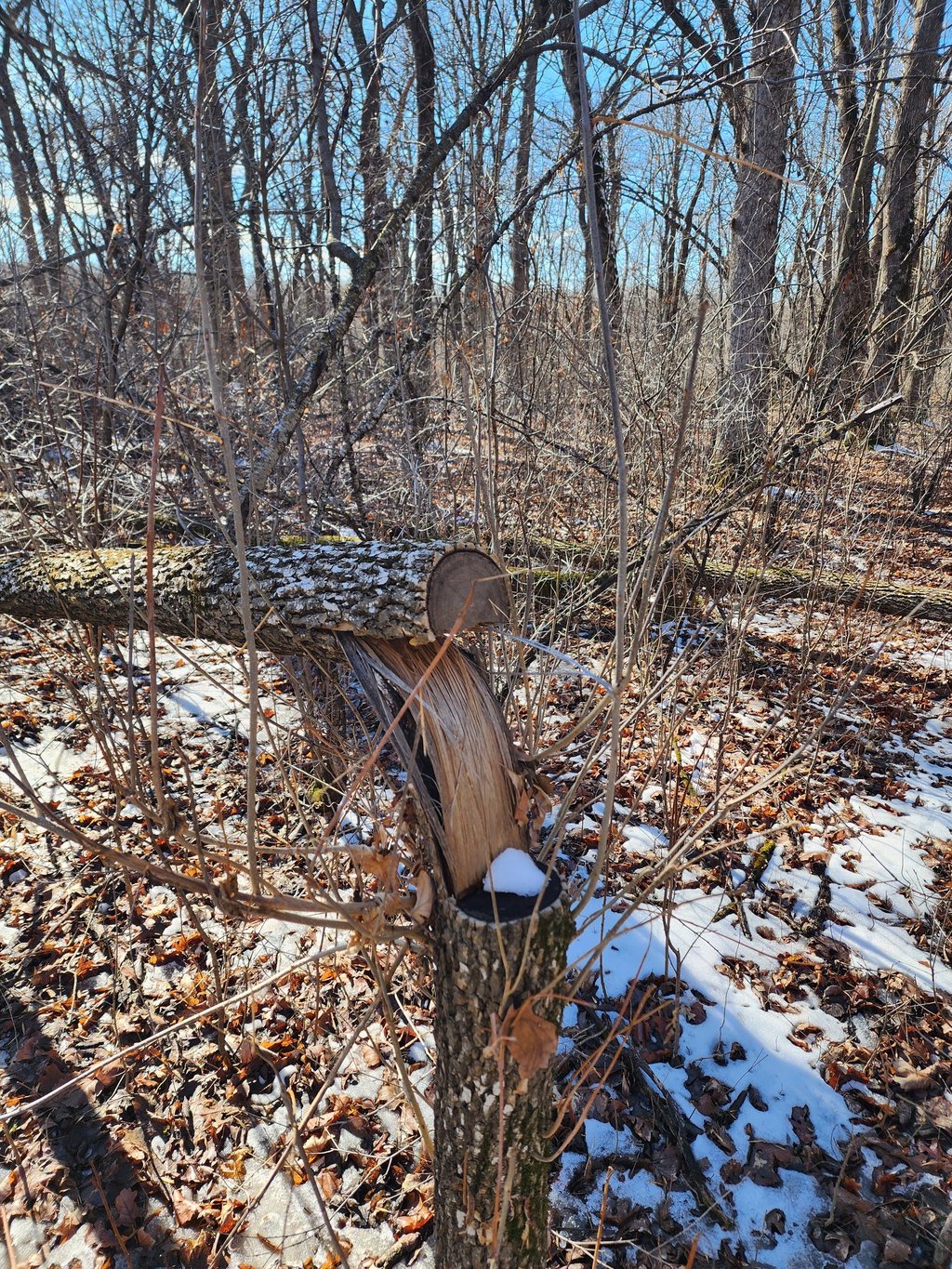
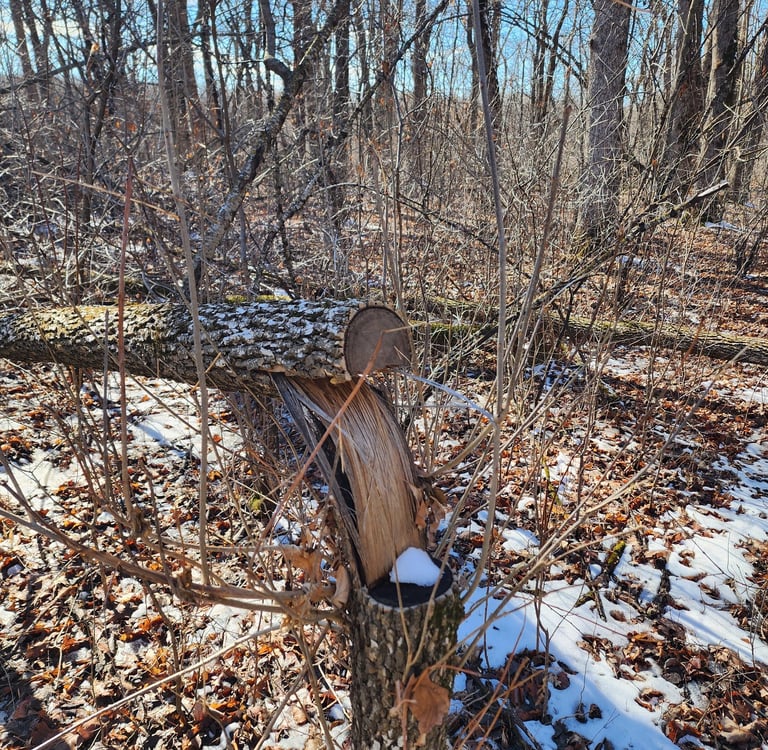
The Purpose of a Hinge Cut
Many hunters are familiar with hinge cutting, but fewer fully understand why it can be effective. Whitetails require three main elements to consistently bed in a location: side cover, browse, and a lack of pressure. A properly executed hinge cut provides two of those three components.
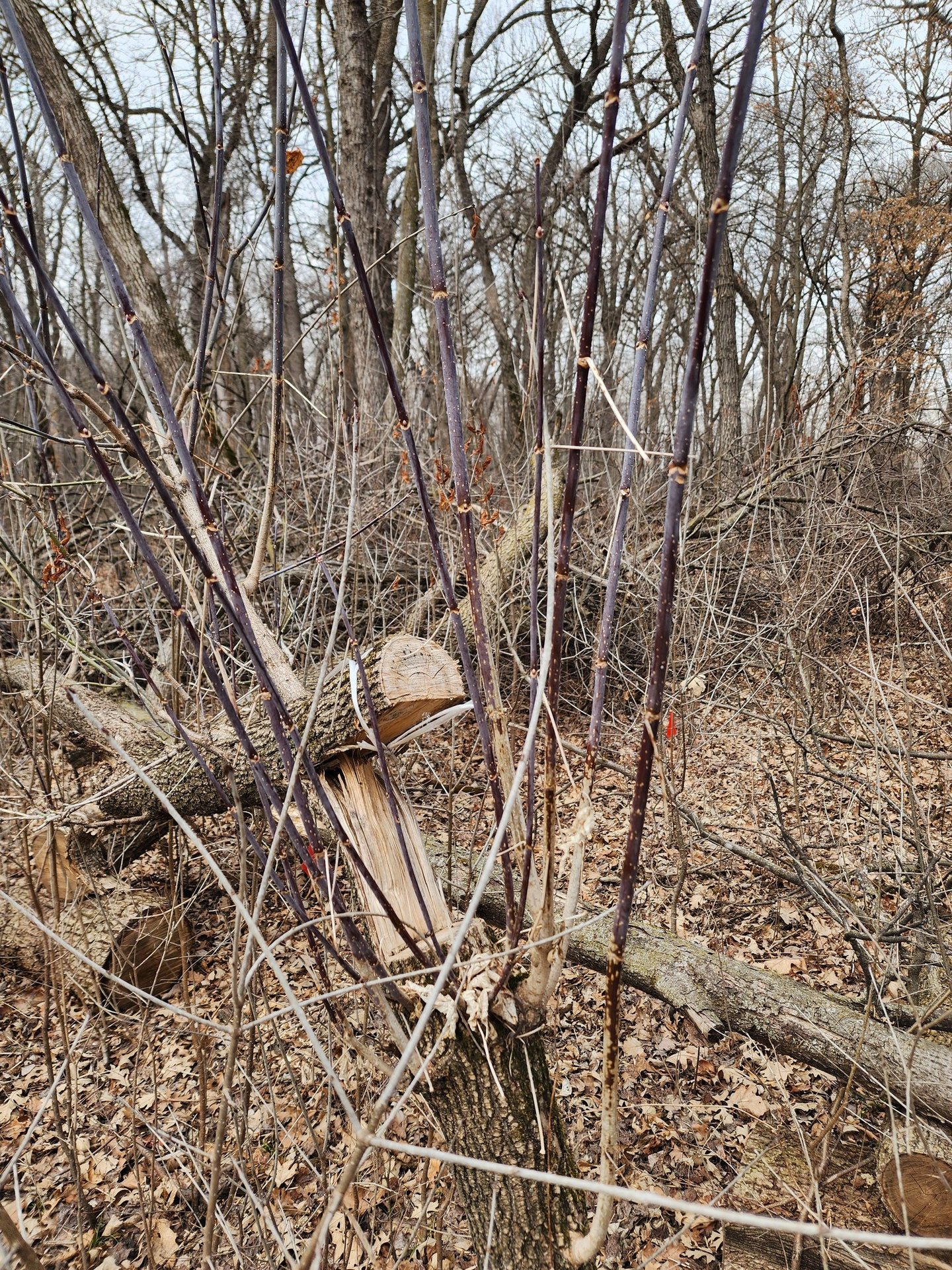
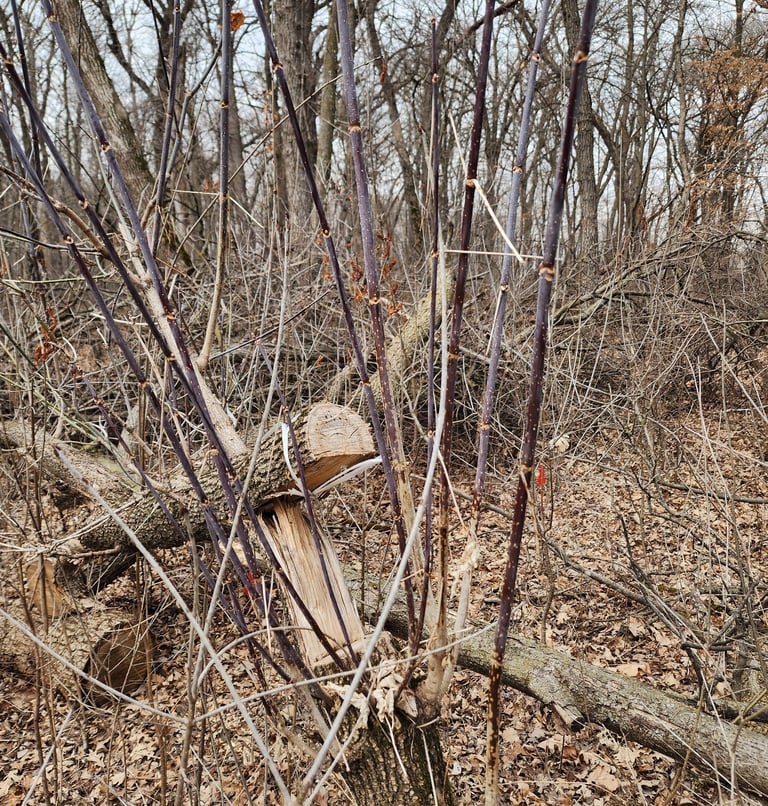
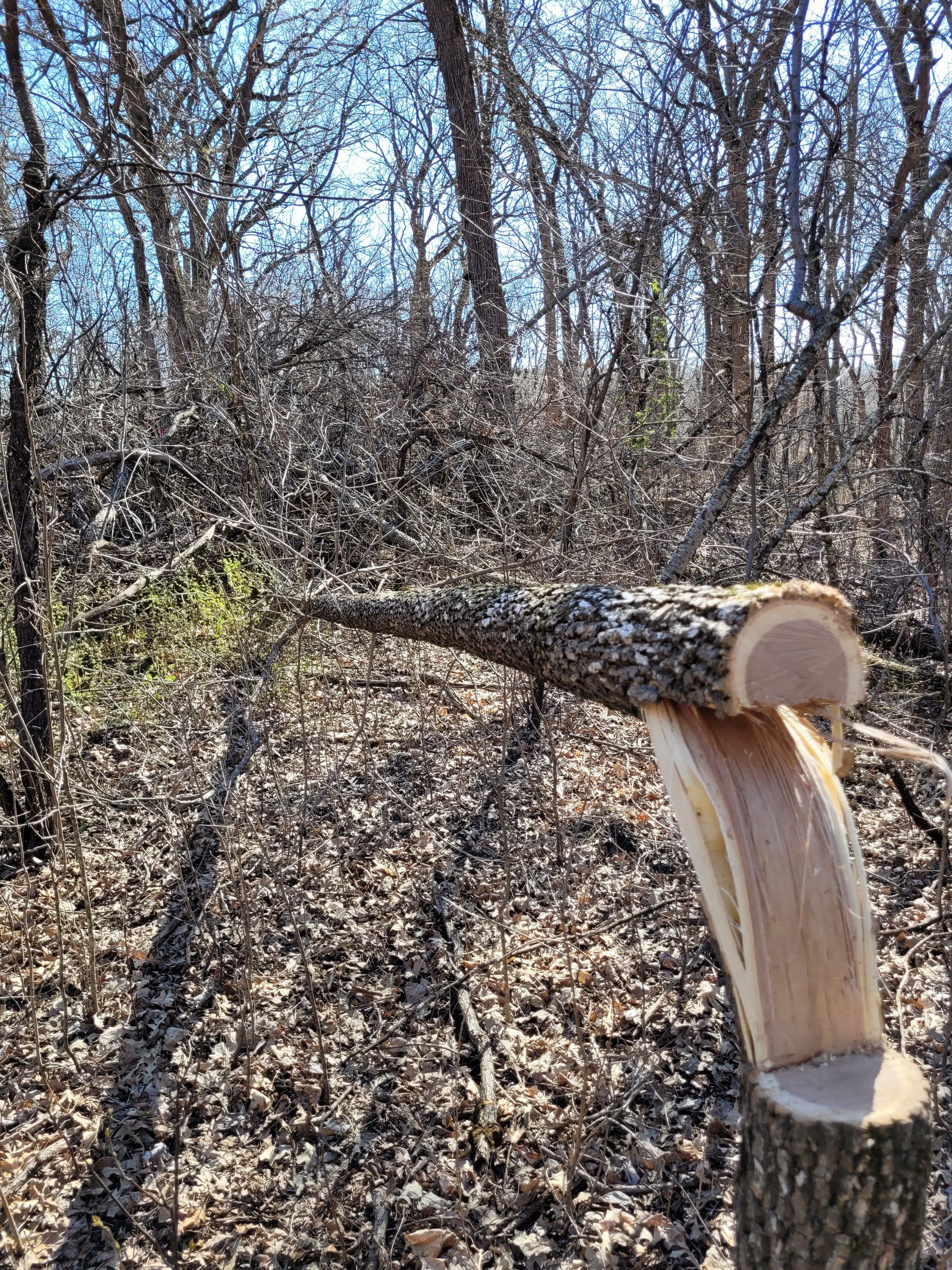
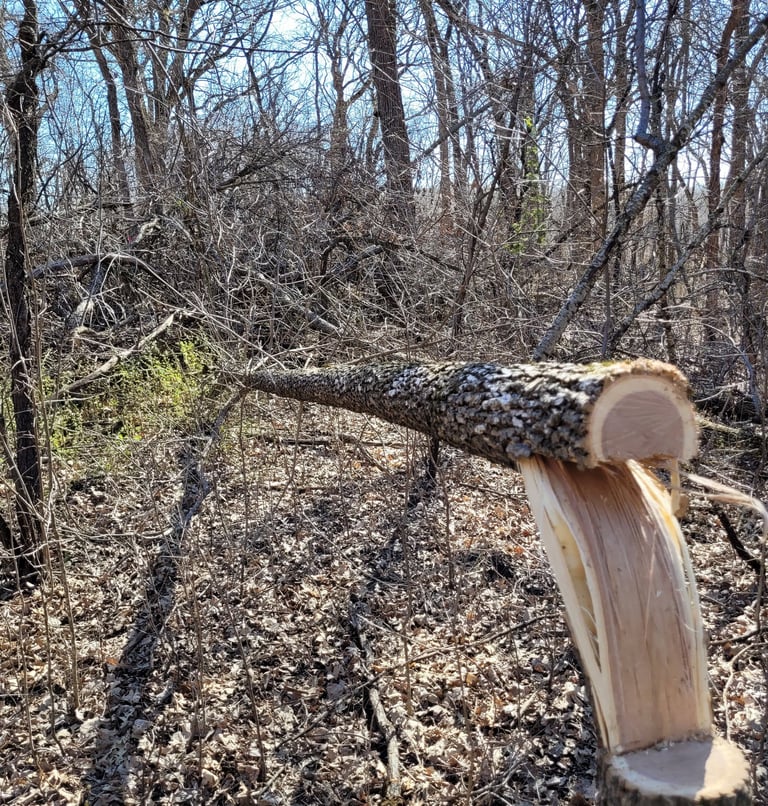
First, hinge cuts create immediate browse at deer level. When a tree is hinged at roughly waist height, the trunk and top remain connected to the root system, allowing the tree to stay alive. This living tree continues producing buds and leaves within reach of deer, essentially turning the tree into a living browse bush.
Second, hinge cuts provide the horizontal cover deer rely on to feel secure. Whitetails are not hiding from birds and planes. Rather, they seek thick cover at eye level that hides them from predators, other deer, and human activity. A well-placed hinge cut lays vegetation horizontally across the forest floor, creating exactly the type of side cover deer prefer in bedding areas. When done correctly, hinge cuts can immediately improve both cover and food availability within a bedding area.
Where to Use Hinge Cuts
Hinge cutting is most effective when used in specific situations rather than applied randomly across a property. The most common use is within bedding areas. After canopy trees have been removed to allow sunlight to reach the forest floor, hinge cutting smaller trees can quickly add side cover and browse while natural regeneration begins to grow.
Hinge cuts can also be used along travel corridors to help influence movement. When used this way, placement is critical. Hinge cuts should guide deer movement rather than constrict it. If trees are hinged parallel to travel routes without openings, deer may feel trapped and simply avoid the area. For that reason, hinge cuts must be made perpendicular to the movement, allowing for escape at any time.
Another effective application is screening. Hinge cuts along field edges or property boundaries can create a soft edge that helps hide food plots, stand access routes, or property lines. When combined with switchgrass, hinge cuts can become part of an excellent natural screen.
Regardless of location, sunlight is essential. Without adequate sunlight reaching the hinged tree, it will eventually die and provide far less long-term value.
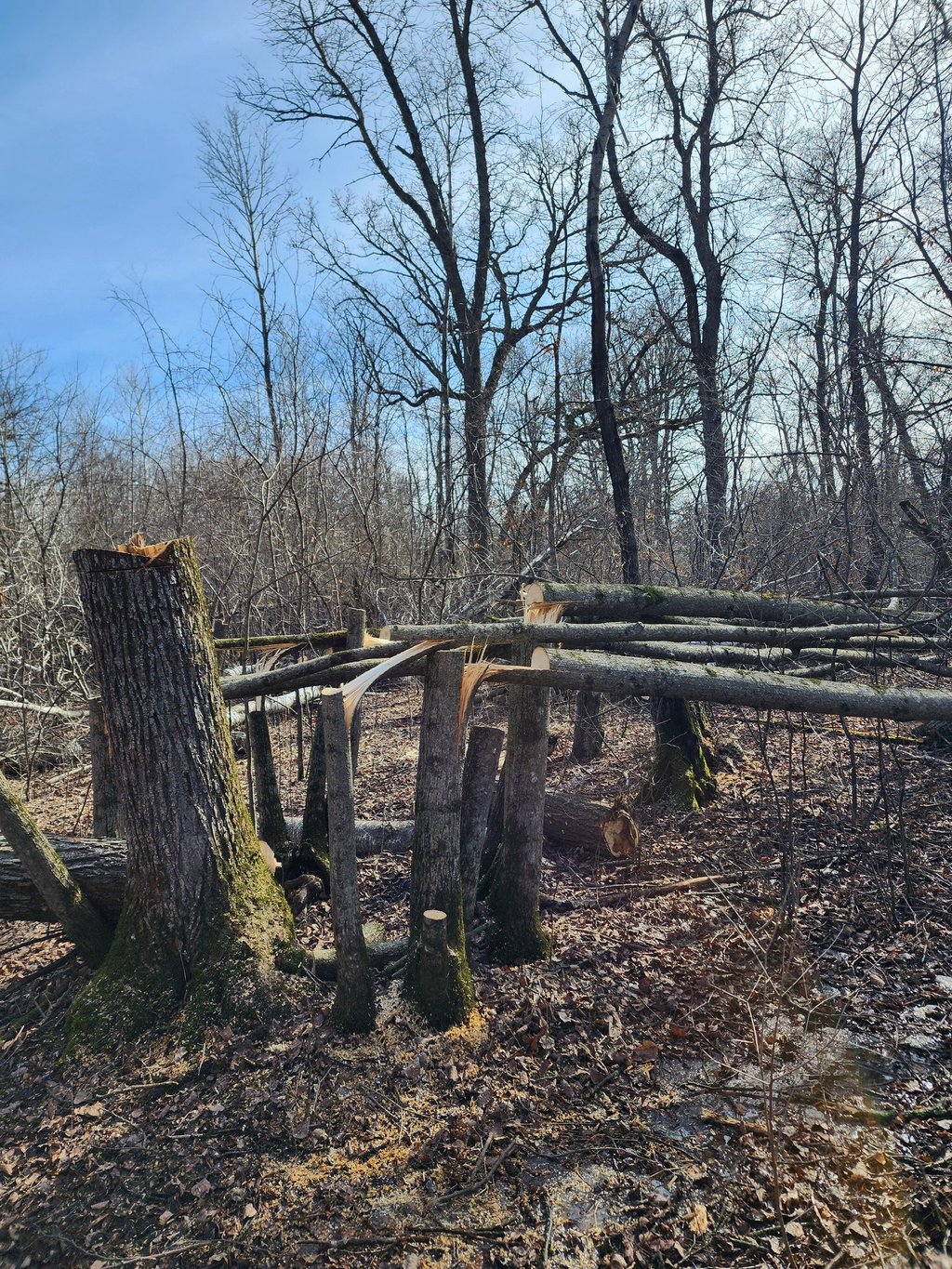
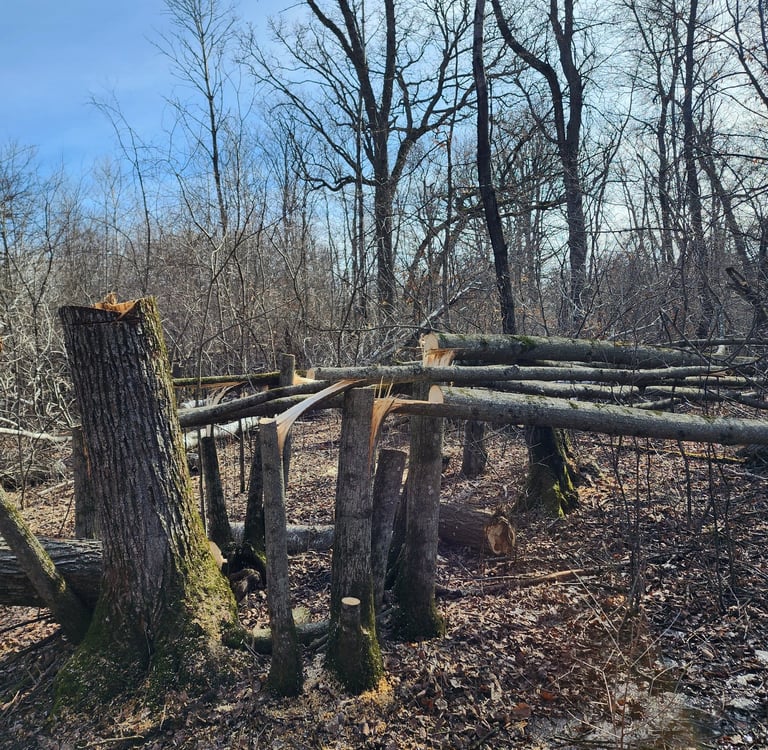
Choosing the Right Trees
Selecting the correct trees is one of the most important steps in successful hinge cutting. In most cases, trees between four and eight inches in diameter are best. Trees that are too large often snap completely when pushed over, wasting the trees maximum potential to grow out of the trunk and top.
Species selection is equally important. Trees such as maple, ash, boxelder, basswood, oak, and hickory are the best for hinge cuts. Among these, species like red maple, ash, and boxelder tend to produce the most desired browse.
As with many habitat techniques, there are exceptions. In certain circumstances, less desirable species may still be hinged if the goal is strictly to create structure and cover. However, in most situations it’s best to focus on species that offer both browse and cover value.
How and When to Hinge Cut
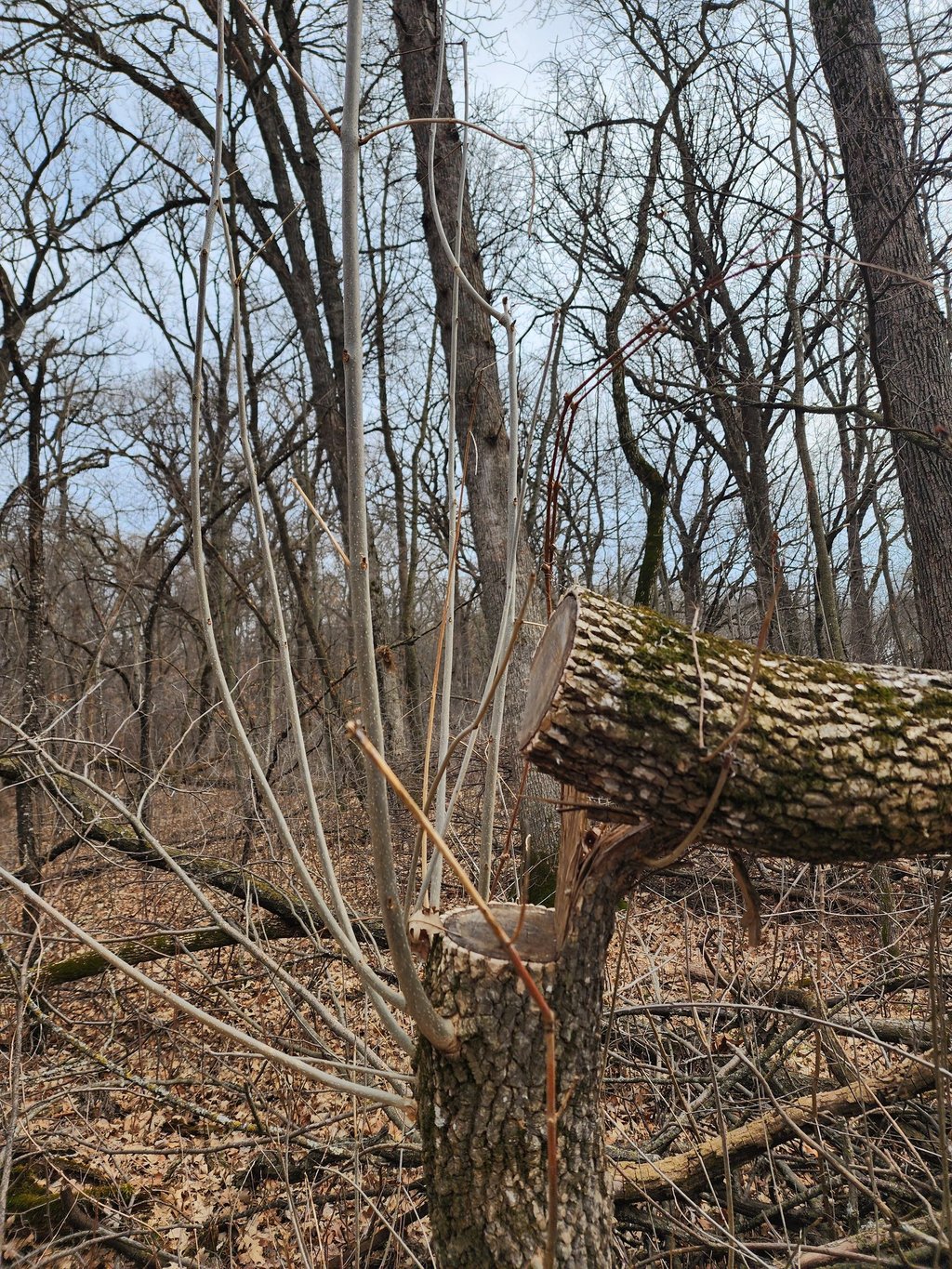
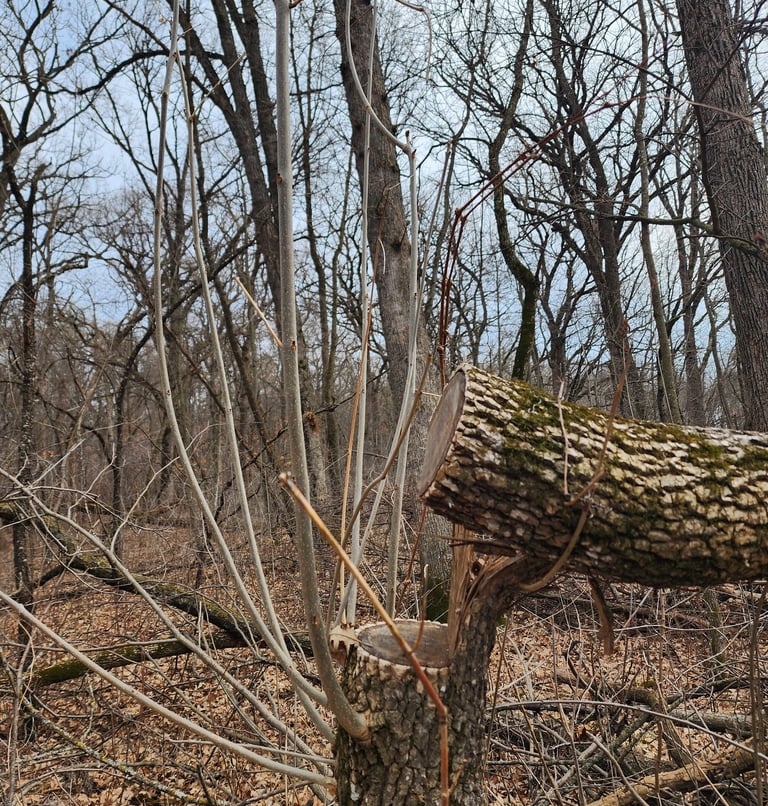
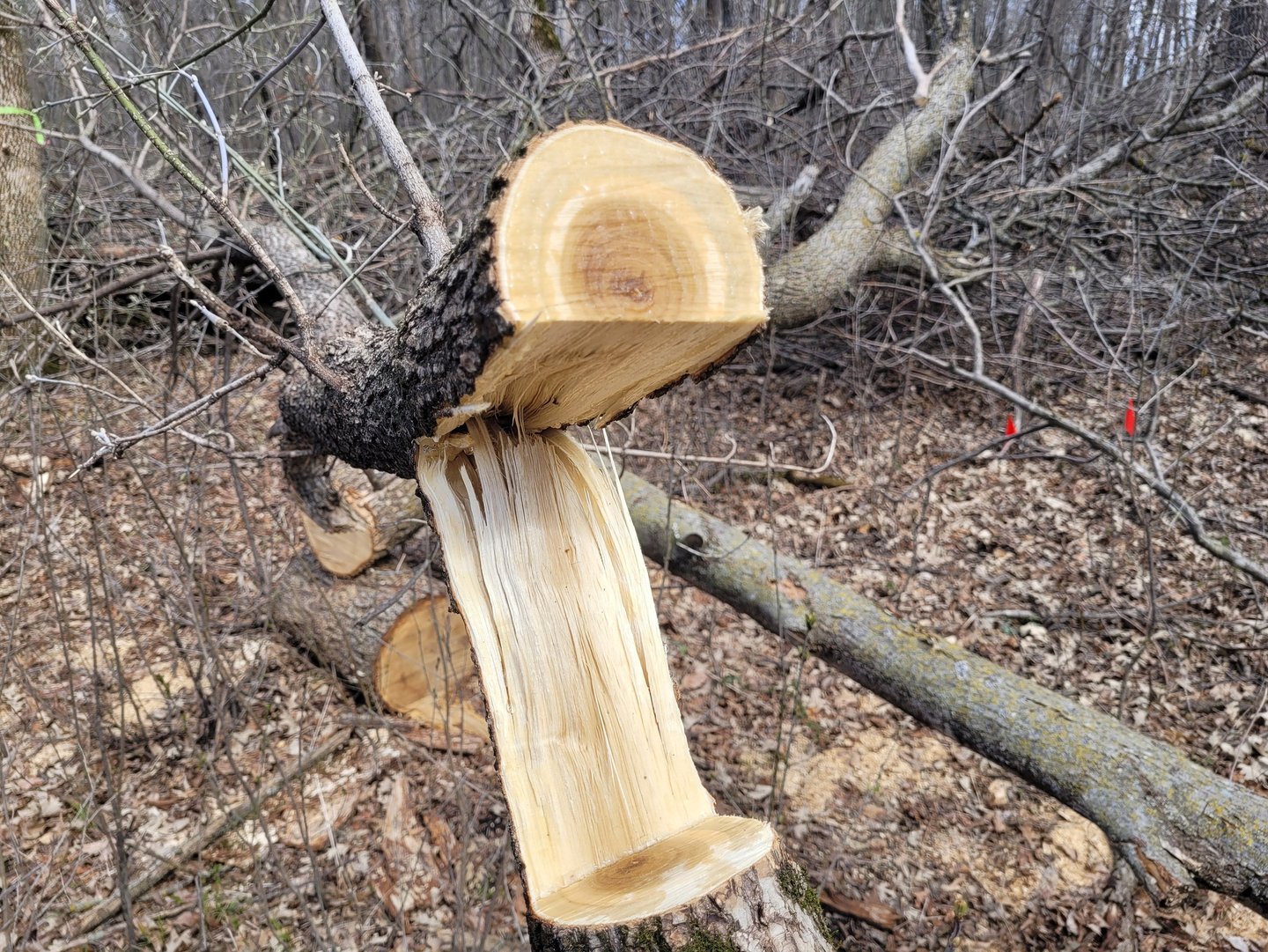
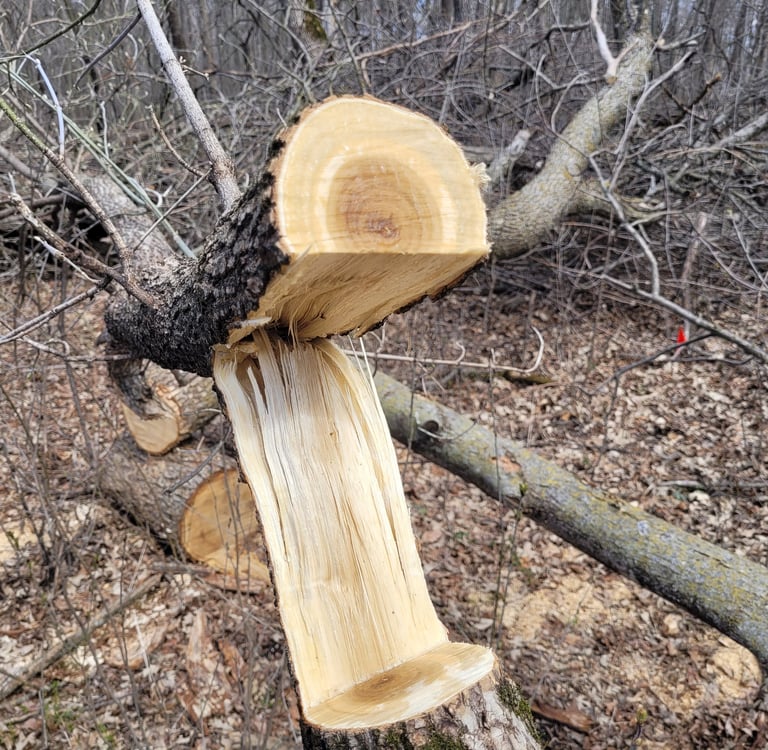
The physical act of hinge cutting is relatively simple, but improper technique is extremely common. A proper hinge cut should be made around waist height, with a shallow cut that allows the tree to bend while remaining attached to the stump. The goal is to keep enough wood fibers intact so the tree stays alive after being pushed over.
Unfortunately, one of the most common mistakes seen online is cutting hinge cuts too high. High hinge cuts place the browse well above deer level and reduce the amount of usable side cover created near the ground.
Timing also plays an important role. Trees respond best when hinge cut while the sap is flowing, typically around the same time maple trees are tapped for syrup. Attempting hinge cuts during extremely cold conditions can cause the internal fibers to shatter, leaving a dead tree instead of a living hinge.
Sunlight is the most important factor. Hinge cuts placed under canopy often fail because the hinged tree cannot receive enough light to survive. This is why hinge cuts should be implemented after canopy trees have been removed in cut bedding areas.
When hinge cuts are successful, they can last for many years. In some cases, they may eventually need to be re-hinged or maintained to keep browse within reach of deer.
A Common Misconception
One of the biggest misunderstandings surrounding hinge cutting is the belief that it is a universal habitat solution. Hinge cuts are extremely useful in the right circumstances, but not every property needs them. If the correct tree species or size trees are not present, hinge cutting may not even be an option. Likewise, properties that already have thick natural regeneration often gain little benefit from additional hinge cuts.
A common mistake occurs when landowners begin hinge cutting across their property without first addressing the bigger habitat picture. If canopy trees remain intact, sunlight cannot reach the forest floor, and the hinge cuts will eventually die. If the wrong species are selected or cuts are made too high, the effort provides little value. Hinge cutting works best when used as one tool within a larger habitat strategy, not as a standalone solution.
Conclusion
Hinge cutting can be an extremely effective technique for improving whitetail habitat when used correctly. By providing browse and side cover, hinge cuts can quickly enhance bedding areas, influence movement, and help create the security deer need to spend daylight hours on your property. However, hinge cuts should always be used properly. Correct tree selection, cutting technique, adequate sunlight, and strategic placement all determine whether hinge cuts succeed or fail.
When approached as part of a larger habitat plan, alongside canopy removal, bedding area design, and pressure control, hinge cutting can become a powerful tool for improving your property. Take a close look at how hinge cutting might fit into your habitat strategy if you want to consistently hold more deer and increase daylight movement for this fall and for years to come.
Copyright© 2026 WHITETAIL SYSTEMS AND SERVICES, LLC